I was recently asked to write an article for the Australian Society for Music Education. Is music an important ingredient of education?
Tomas Fitzgerald
TOMAS FITZGERALD IS A MUSICIAN, COMPOSER, AND EDUCATOR OF STUDENTS WITH DISABILITIES. HE HAS SINCE PIVOTED TO BUILDING SENSORY IDIOPHONES, FOUNDING THE COMPANY WELLBEING INSTRUMENTS.
During my time in special education, I was a teacher to students with multiple profound intellectual and physical disabilities. Perhaps my biggest take away was the importance of enabling students to be in a position where they are “ready to learn”, a concept that I have found just as relevant to mainstream education settings.
These remarkable students I taught while working in special education had widely varying challenges. Their educational and personal goals were equally diverse. However, they shared a common thread: an authentic engagement with music.
Many of the students were able to utilise the expertise of music therapists within the school environment and families chose to access music therapy at home, as it was widely considered a crucial support to their development.
It is my view that losing the ability to access funding to secure this type of support would likely hinder student progress in terms of individual and social engagement, emotional and sensory regulation, and communication development.
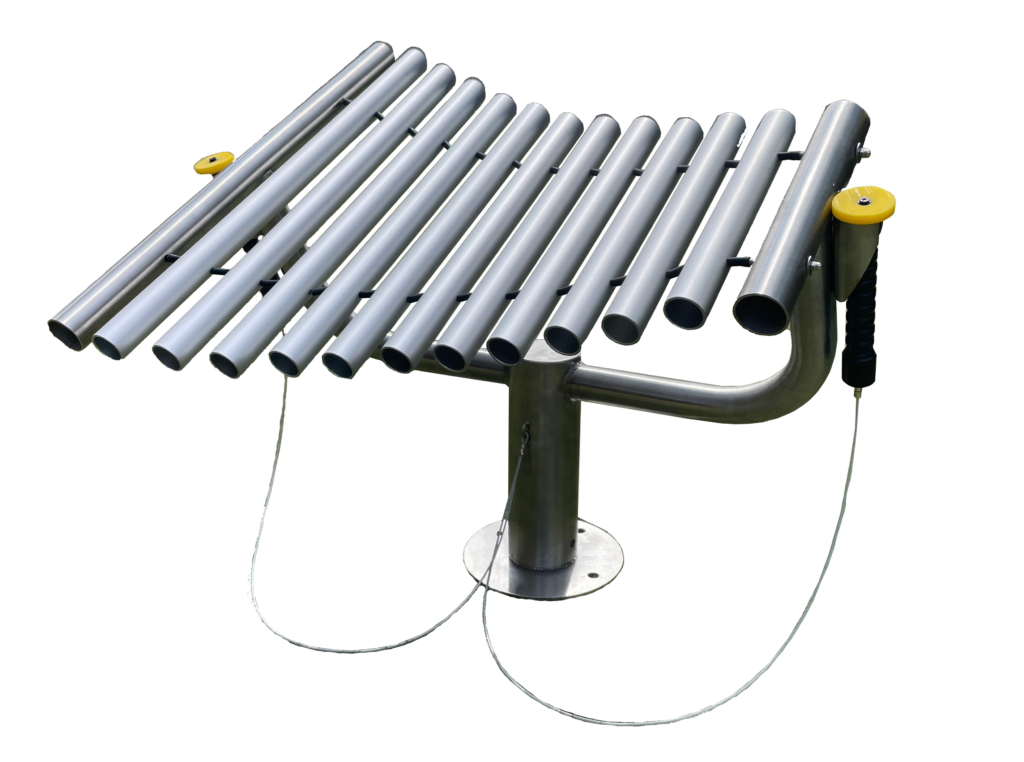
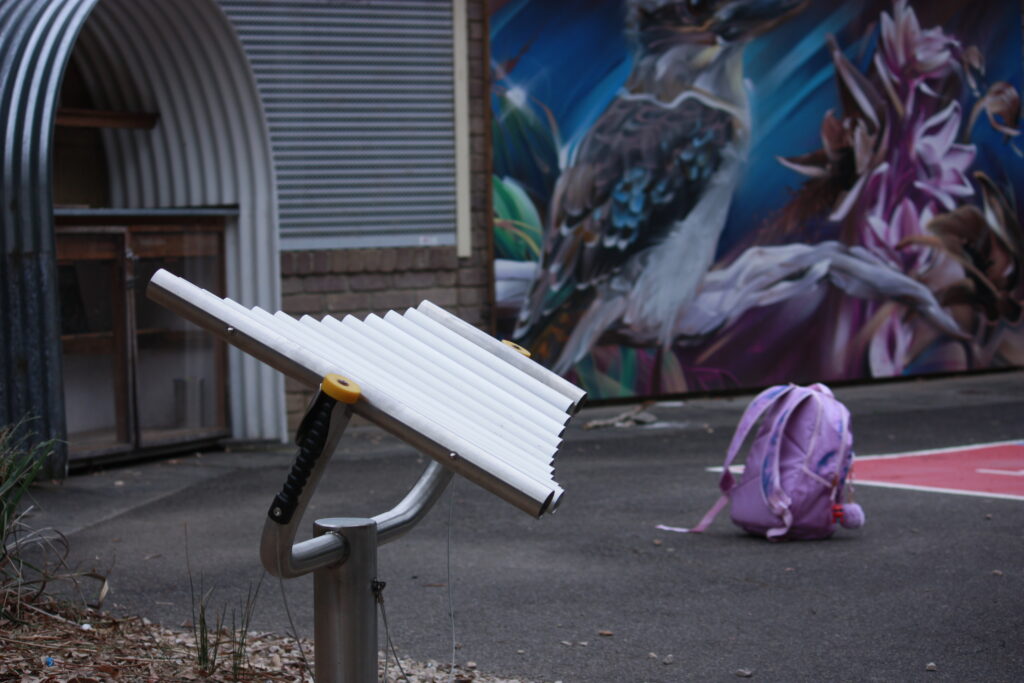
The experiences I had with these students were the impetus for founding Wellbeing Instruments, a company dedicated to creating accessible musical instruments to support student wellbeing. It was a natural and worthy progression, as music had played such an important role in contributing towards not only my students’ learning but also their enjoyment at school – their readiness to learn.
Calming music would welcome students back to our classroom from the ever-hectic lunch breaks and I would observe the heightened states of students slow and resolve to a more peaceful pace appropriate for learning. Not only did music help to create an environment which was calm, safe and welcoming, but it also served as a cue for these students that learning would soon resume. This in turn helped them to adopt routines that fostered a sense of reliability in the structure of their day.
In combination with other strategies, music also served as a tool to assist students’ sensory regulation. Much like drawing a curtain, I witnessed students become liberated, revealing the conscious communicator waiting patiently behind a veil of sensory needs.
In my experience, music provides an engaging and empowering pathway to learning.
You can access the entire article on the Australian Society for Music Education: here.