
By Tom Fitzgerald
Walk into any school across Australia, and you’ll find a quiet but determined effort underway: educators reshaping classrooms, corridors, and playgrounds to better include every child who walks through the gates.
Inclusion is no longer a fringe ideal. It’s a word that features in policy papers, mission statements, and departmental briefings. But in real schools, it’s something far more lived-in, built not from top-down mandates but from bottom-up gestures: a lesson adapted on the fly, a quiet space carved out for calm, a staff member who sees what a child can’t yet say.
And it’s here in the small, the everyday that inclusion becomes real.
In more than a decade working across special education and mainstream settings, I’ve seen just how often inclusion relies not on big budgets, but on sharp observation and human instinct. I’ve worked with students who speak in sound, not words; whose calm is found not in silence, but in rhythm; who engage best when their needs are recognised without fuss or spotlight.
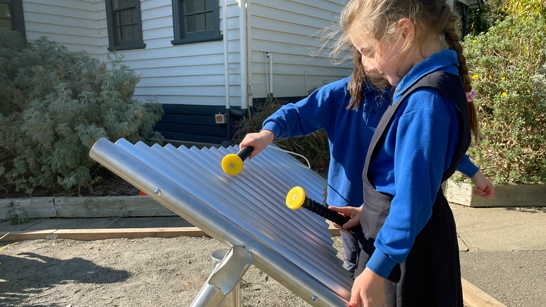
Sometimes it’s a piece of music that offers a way in. Sometimes it’s a quiet corner, a sensory-rich break, or the freedom to move. Not as a reward, but as part of the learning itself. These are not luxuries. They are, for many students, the conditions in which learning becomes possible.
What’s striking is how often it doesn’t take much to make this happen. One teacher rethinks their classroom layout. Another reframes a behavioural moment not as defiance, but dysregulation. A school introduces a multi-modal activity to ease the jump between subjects. These aren’t sweeping reforms, they’re intelligent, responsive acts. And they change everything.
Still, even the most committed teachers can only do so much without structural support. Inclusion thrives where systems back it up: when funding flows to programs that recognise neurodiversity, when school design accounts for sensory and physical needs, when staff are given time to plan, to reflect, to collaborate.
Victoria’s Disability Inclusion Program is one example. It provides schools with tangible resources to embed inclusive practices — including funding for specialist tools, environmental adjustments, and staff training. Its tiered funding model gives schools the flexibility to meet a range of student needs without waiting for a diagnosis.
The physical environment matters, too. If we say we value inclusion, but classrooms remain noisy, rigid and overstimulating, we’re not following through. Sensory-friendly design and universal access aren’t feel-good extras. They’re the foundation for a school culture that meets students where they are.
Even at the earliest stages of education, programs like the Inclusion Support Program in early childhood settings are showing how responsive, inclusive practice can be embedded across learning environments — creating a stronger continuum of care and learning through to the primary years and beyond.
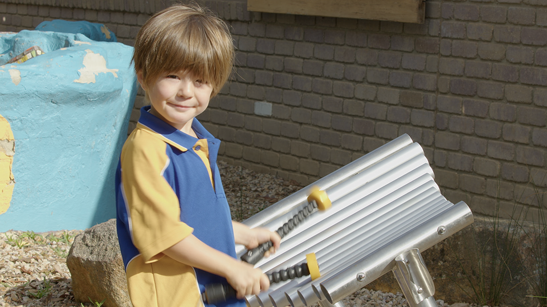
Ultimately, inclusion isn’t something we do for a subset of students. It’s something we build with them and it benefits everyone. A learning space that supports sensory regulation doesn’t just help the student in meltdown. It helps the class settle. It helps the teacher teach.
And this is the quiet truth playing out in schools every day, with little fanfare: inclusion as a way of teaching, not a separate task. Inclusion as a lens, not a label. When schools get it right, and many are, often without headlines or hashtags, they show us what education can be at its best: connected, caring, and responsive to the humans in front of us.
We don’t need to start from scratch. We need to notice what’s already working and back it with policy and support.
Wellbeing doesn’t just happen in the classroom, it’s designed into the spaces where students play, interact, and regulate.